A brief history on the stretch of greenery between Washington Park and Jackson Park!
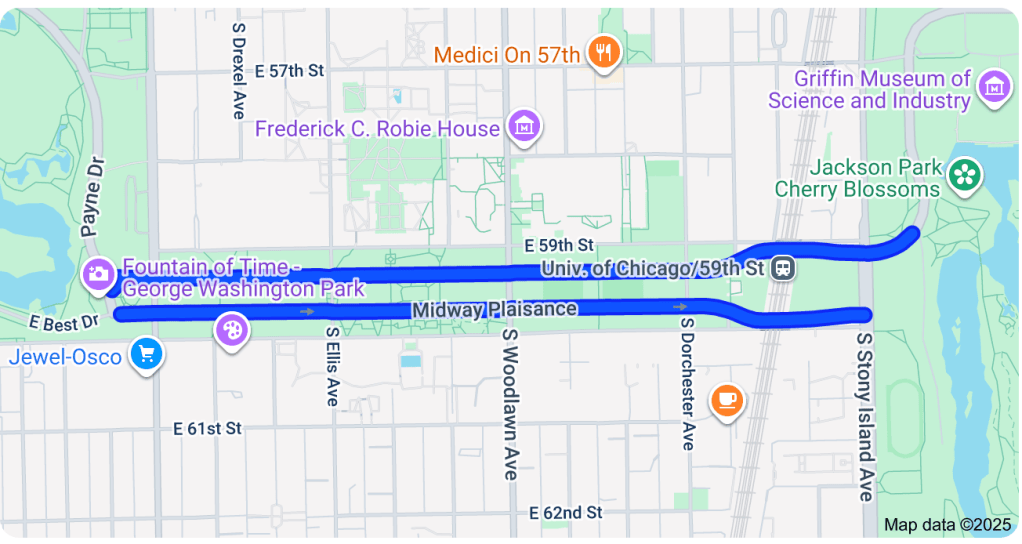
The Midway Plaisance. Switzerland in a car-oriented world. This patch of greenery has a stronghold on the grass linking Jackson Park and Washington Park, Hyde Park, and Woodlawn. From day to day, you’ll see anything from neighborhood adult football leagues to nerdy U of Chicago students playing with handmade swords, to children playing soccer, to an ice skating rink, to people sight seeing the stars with their telescopes. What an excellent use of land!
South Park : A Web of Lagoons
This place started as a brain child, to be called South Park. City developers envisioned a web of lagoons that allowed Lake Michigan to flow into the heart of the South Side. It was to be a bit of a canal to Washington Park actually. Imagine, back then it was just a random stretch of muddy land. The city commissioned Olmsted, Vaux & Company (a landscape architecture firm) to make this happen.
(A bit of a tangent but this guy Olmsted had a political side. Before landscape architecture, he was a reporter that traveled the South and recorded first-person enslaved narratives. They are some of the most detailed, to this day. He gradually became anti-slavery and began to speak out against southern plantations, which he called primitive, and slavery in general. His writings helped convince England to not recognize the confederacy.)
ANYWAYS, it’s pretty poetic his landscape architecture led to some of the most prominent greenery on the predominantly black south side of the city!
A Series of Unfortunate Financial Events
Okay, so this brainchild was conceived around 1870 but then, of course, the Great Chicago Fire brought the city to its knees the next year. It wasn’t until the 1890s, when the World Columbian Exposition came to Chicago that the city began prioritizing the idea of a South Park, and the Midway Plaisance again (Plaisance is an old french word for pleasing, secluded garden – so you already know the elites were eating that up).
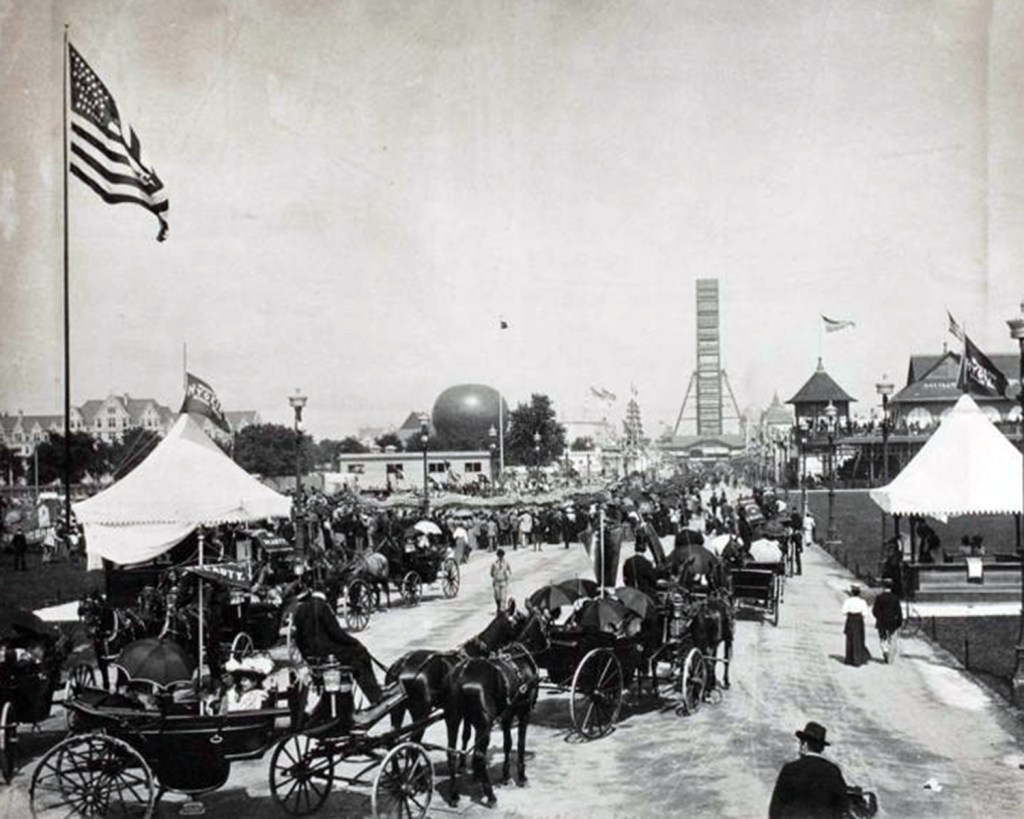
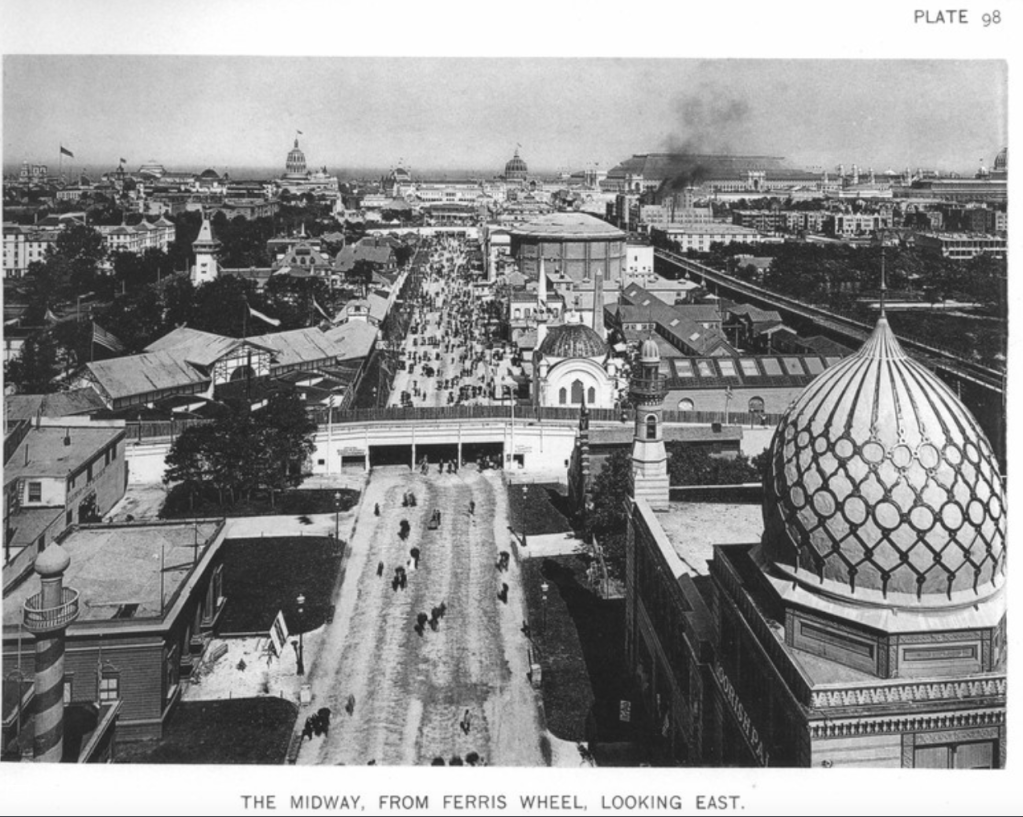
The engineering behind this muddy stretch was a little shaky though, as it was originally pretty low-lying. Sunken, actually. And made of clay, so just like a swamp, the soil tended to hold water instead of letting it filter further underground. It was like a heavy sponge. The surrounding community started calling it Mudway Nuisance!
University of Chicago Landscaping and Development
After the exposition, Olmsted kept working on the midway, but it was stop and go, fraught with permitting issues, property rights disputes, and then finally the Great Depression hit the country. Construction stopped completely. When it started again, around 1920, another architect had taken over and University of Chicago was expanding rapidly. Buildings popped up around the plaisance, and that kept it presentable. Then, around the year 2000, University of Chicago started ‘developing’ the community around it (a story for another time), which included that area. Fountains, landscaping, small sidewalks, were all implemented. The grass was kept mowed and an ice skating rink was added. While the Midway truly is one of the most walkable large areas in the city, it still continues to evolve, with bike lanes being added in the surrounding areas.
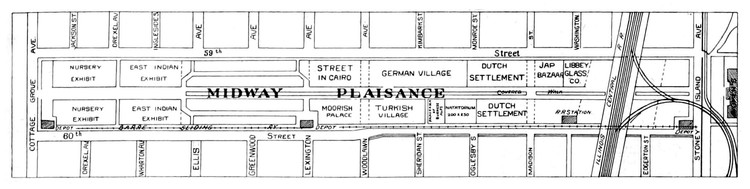
Let’s hope this area serves as an evolving example to a great use of land space and city landscape architecture – and maybe one day the original idea of a South Park will be realized!
 Finding Chi - The Last Human-Generated Blog Dedicated To Discovering Chicago
Leave a comment