This story starts about 360 feet below our feet, much of it being underneath the city’s South and West sides. Called the “Deep Tunnel”, cavernous networks of flood tunnels and emptied reservoirs serve as routes to hold extra water until it can be diverted and treated at the city treatment plants.
But let’s start from the top.
The Engineering Around Chicago’s Toilet Water and Rainwater
In Chicago, all you flush down your toilet and wash down your drains ends up in the sewer systems. That’s obvious. It’s then routed to city WASTEwater treatment plants that basically treat the water until it’s to an acceptable degree to be dumped back into nature. It’s not up to drinking water standards, but it’s clean enough to not harm the environment. It ain’t much, but it’s honest work. This is what happens in pretty much every city around the world.
To be clear, there are two types of water that goes through this process – all our nasty waste from our homes and businesses AND all the rainwater and runoff that washes into gutters and manholes in the city (the stormwater).
Therefore, when there is a torrential downpour, or when all these feet of snow melt, the sewers will be taking not only our residential waste, but also all the water that falls on the city and runs off into street drains. That’s a huge volume to handle.
You know that parking lot off 87th and the Dan Ryan? Best Buy used to be there. You know how it floods everytime it rains? Or how under viaducts, it’s usually a dirty lake? This is because the sewer pipes have basically reached capacity. Our sewers are getting water faster than it can route it to the treatment plants and treat it.
The city’s solution, which works most of the time, prevents that. Flood tunnels, like as large as a subway – store and route the water so that the treatment plants have time to catch up.
Chicago’s Hidden Engineering Solution : The “Deep Tunnel”
Back in the 70s, Chicago’s civil engineers began digging 4 networks of tunnels, totaling around 110 miles of large, rock tunnels (up to 33 feet wide) that connect SEVERAL large reservoirs (colossal empty pools for the water to flow into). The Deep Tunnel’s mission is “reduce flooding, improve water quality in Chicago area waterways and protect Lake Michigan from pollution caused by sewer overflows” (quoted from Chicago’s Metropolitan Water Reclamation District, the sewer engineers). We finished the tunnels in the 80s, but are still expanding some of the reservoirs. This is one of the top civil engineering feats in the world! And Chicago implemented these tunnels earlier than many of the cities who have now turned to this concept as well.
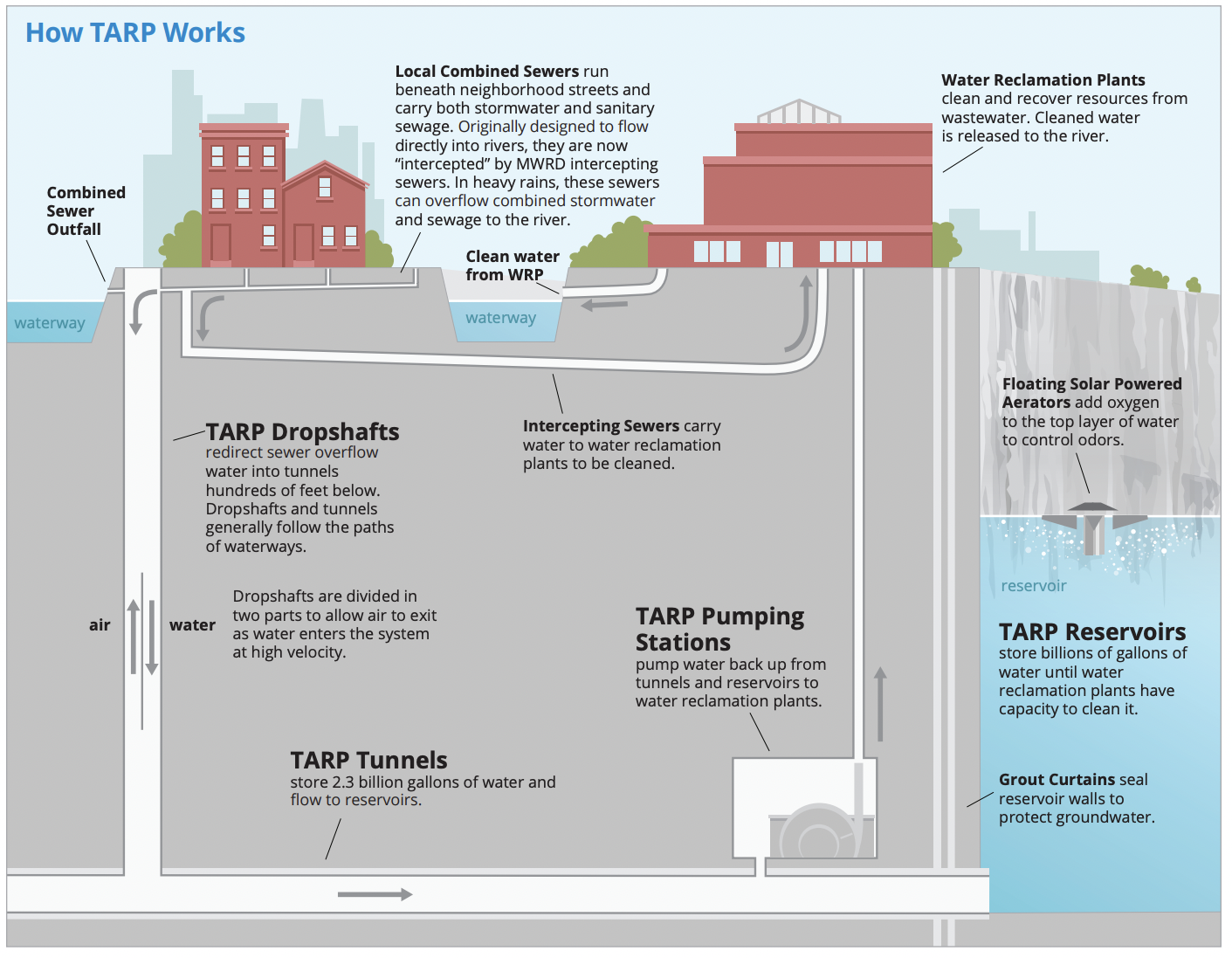
To get a sense of the size of these empty pool/reservoirs, here are some stats:
- All flood tunnels can hold up to 2.3 billion gallons
- All flood reservoirs will be able to hold 15 billion gallons (after construction is complete in 2029)
But, where are the reservoirs and where does the tunnel run?
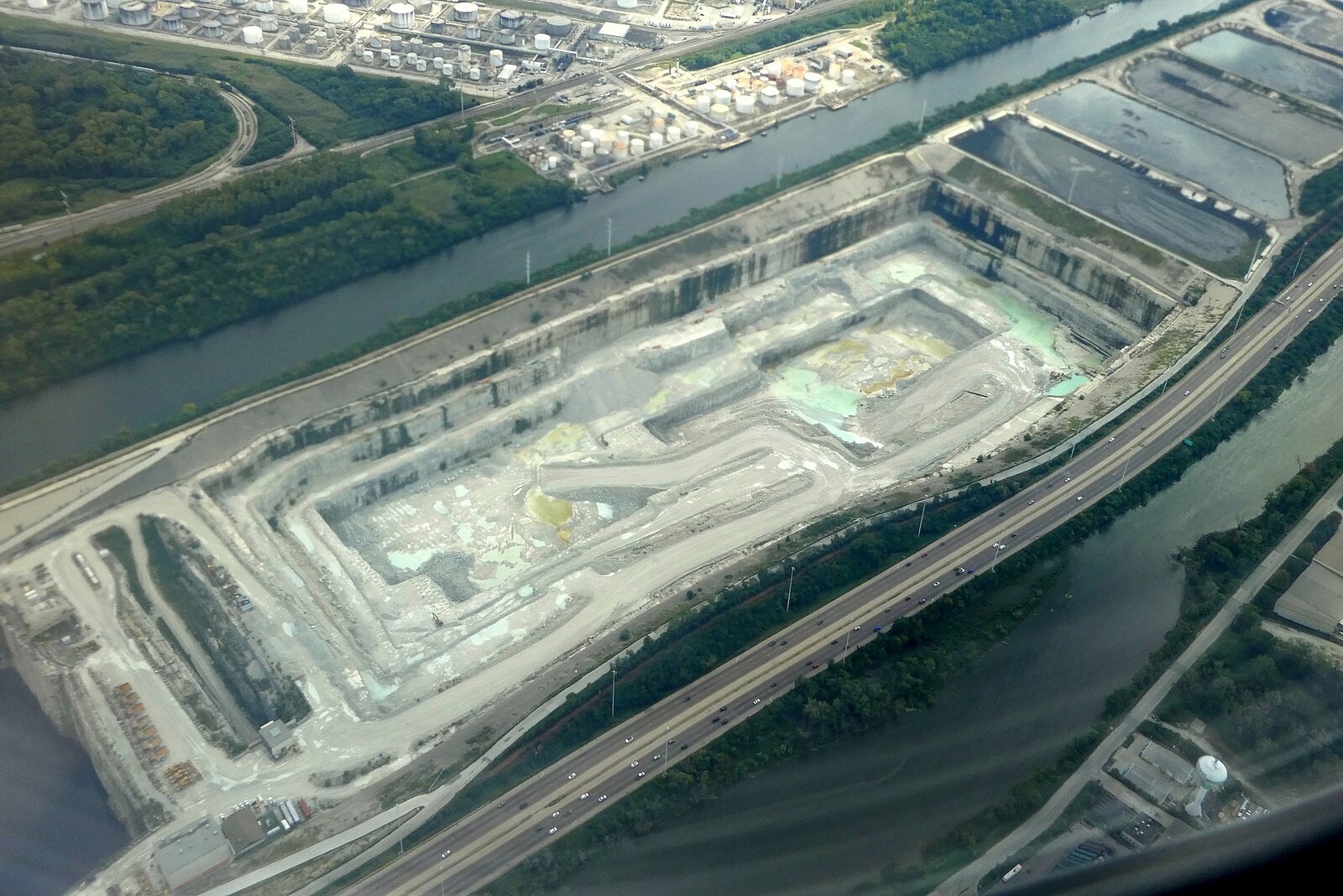
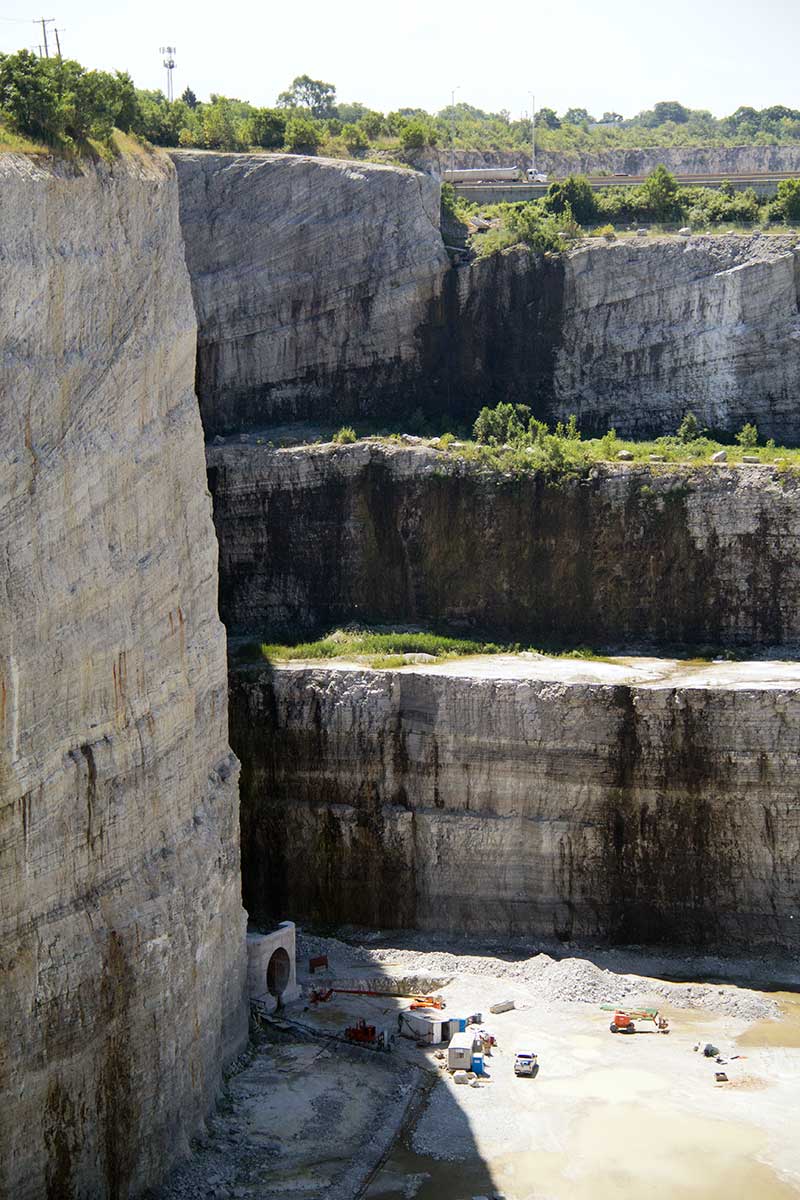
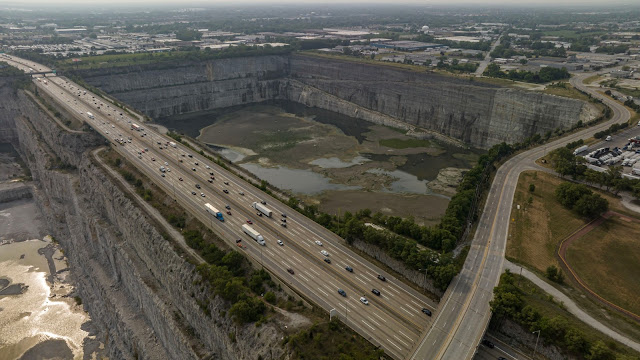
The three water reservoirs are named The Majewski, Thornton Composite, and McCook Reservoir. The McCook reservoir is a bus ride past the end of the Orange Line, directly due West. Here’s a link to watch the McCook reservoir via live feed.
But Wait – Are These Tunnels Helping Or Hurting The Environment?
Investing in flood-prevention infrastructure is a matter of survival, especially as global warming progresses and thunderstorms around the world worsen and become more unpredictable. An open-ended question I will leave you with is a point of debate amongst civil engineers, geotechnical engineers, urban planners, and environmentalists. What are the long term repercussions of digging such large, impenetrable, concrete tunnels underground?
That’s probably a question for future engineers. Gen Z, tap in!
Sources:
 Finding Chi - The Last Human-Generated Blog Dedicated To Discovering Chicago